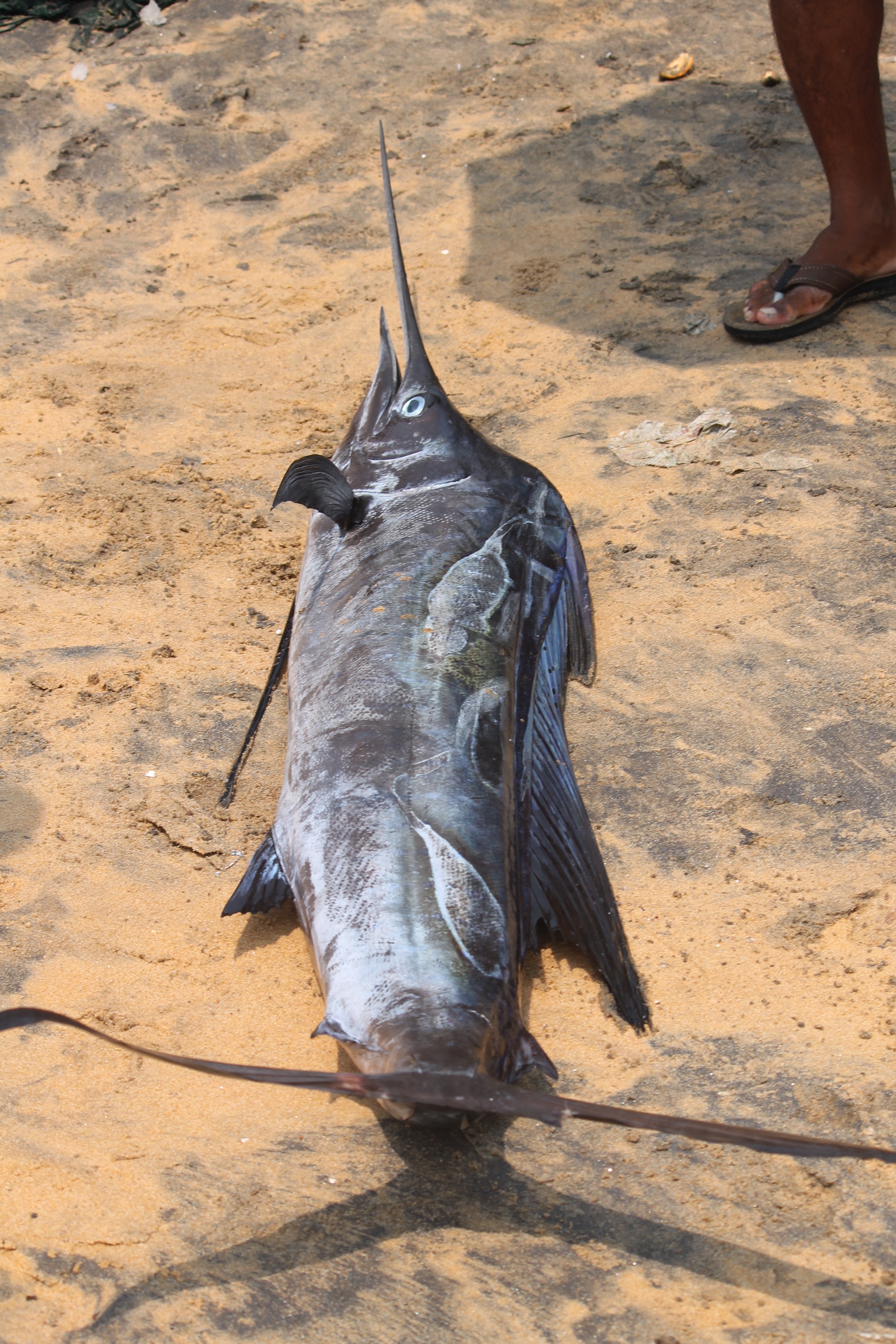
തള / Thala

കട്ട, കട്ടക്കൊമ്പൻ,തള
സമുദ്രത്തിലെ ഏറ്റവും വേഗതയേറിയ മത്സ്യങ്ങളാണ് ഇവ മൂന്നും കാഴ്ചയിൽ സാദൃശ്യമുണ്ടെങ്കിലും തളകളുടെ മുതുക്ചിറകിന് ഒരു പായയുടെ വലിപ്പമുണ്ട്. ഈ മൂന്ന് മീനുകളുടെയും മൂക്കുകൾ നീണ്ട് കൊമ്പുപോലെ കാണപ്പെടുന്നു. ഉപരിതല മത്സ്യങ്ങൾ ആയ ഇവ വേഗത്തിൽ ഓടുന്നതോടൊപ്പം സമുദ്രത്തിന്റെ മുകളിലേക്ക് കുതിച്ചുപായും. ചൂണ്ടയിൽ വീഴുമ്പോൾ കട്ട മരത്തിന്റെയോ വള്ളത്തിന്റെയോ അടുത്ത് വന്നശേഷം അങ്ങനെ പറയുന്നത് ഏറെ അപകടകരമാണ്. വള്ളത്തിൽ ഇരുന്നുകൊണ്ട് ഇവയെ ചൂണ്ടയിൽ പിടിക്കുന്നതിനേക്കാൾ ഏറെ അപകടകരമാണ് മുൻകാലങ്ങളിൽ കട്ട മരത്തിൽ ഇരുന്നുകൊണ്ട് ഉള്ള തൊഴിൽ. എങ്കിലും ഈയിനം മീനുകളെ ഇന്നത്തേക്കാൾ കൂടുതൽ പിടിച്ചിരുന്നത് മുൻകാലങ്ങളിൽ ആയിരുന്നു. കടലിൽ വച്ച് അത്ര വിദഗ്ധരല്ലാത്ത ഒരാളുടെ ചൂണ്ടയിൽ ഒരു കട്ടക്കൊമ്പൻ ഇര എടുത്തുവെന്നു കരുതുക. ആ കട്ടക്കൊമ്പൻ ചൂണ്ടയുമായി പായുകയും കട്ടമരംആങ്കറിൽ തന്നെ ഇരിക്കുകയും ചെയ്താൽ ആ പാച്ചിലിൽ ചൂണ്ടക്കയർ പൊട്ടിപ്പോകാനാണ് സാധ്യത. അതിനാൽ അയാൾ ഉടൻ കട്ടമരത്തിന്റെ ആങ്കർ ഉയർത്തും.അപ്പോൾ ഈ കട്ടമരത്തെയും വലിച്ചുകൊണ്ട് ഓടുവാനുള്ള ശക്തി കട്ടക്കൊമ്പന് ഉണ്ട് എന്നതാണ് അനുഭവം. പലപ്പോഴും ഇങ്ങനെ വലിച്ചു കൊണ്ട് ഉൾക്കടലിലേക്ക് ഓടുമ്പോൾ അതിനിടയിൽ അയാൾ വിദഗ്ധനായ ഒരു തൊഴിലാളിയെ കാണുകയാണെങ്കിൽ ഉടൻ അയാളെ വിളിച്ച് ചൂണ്ടക്കയർ അയാൾക്ക് കൈമാറും. ആ മത്സ്യത്തെ അയാൾക്ക് പിടിക്കാനായാൽ 50 ശതമാനം വീതം പങ്കുവക്കൽ എന്നതാണ് അക്കാലത്ത് കടപ്പുറത്ത് നിലനിന്നിരുന്ന കീഴ്വഴക്കം. പലപ്പോഴും കട്ടക്കൊമ്പനെ അവിദഗ്ധ തൊഴിലാളികൾ പിടിക്കാൻ കഴിയാതെ വരുമ്പോൾ അപകടം ഒഴിവാക്കാൻ ചൂണ്ടക്കയർ മുറിച്ചു വിടുകയാണ് പതിവ്.
ലോകത്തിന്റെ പല കോണുകളിലും ഇവയെ അനിയന്ത്രിതമായി വേട്ടയാടുന്നതിനാൽ ഇവയുടെ നിലനിൽപ്പ് ഇപ്പോൾ അപകടാവസ്ഥയിലാണ്.
കട്ട, കട്ടക്കൊമ്പൻ,തള (KATTA, KATTAKOMBAN, THALA)
These three fishes Katta, Kattakomban &Thala, are the fastest fishes in the ocean. Although these three are similar in appearance, the dorsal fin of the Thala attains the size of a mat. The snouts of all three fish are long and look like horns. These are surface fish that swim fast and leap high over the ocean surface. It is very dangerous to catch these fishes sitting on a catamaran or boat from nearby with a bait, because as they leap you may fall. In the past, catching them with bait sitting on a catamaran was more dangerous than while sitting on a boat to catch them now. However, this type of fishes were caught more often in the past than today. Suppose a Kattakomban was caught by a non-expert fisherman at sea, and if that Kattakomban swims away highspeed with the bait, while the catamaran sits on anchor, the possibility is that the fishing line will break during that high speed fleeing. Then the fisherman will immediately raise the anchor of the catamaran. From experience it is note that the Kattakomban will be having the strength to pull this catamaran along with it while fleeing away. Often, while being pulled into the deep sea, if the unskilled fisherman sees a skilled worker, he will immediately call him and hand over the fishing line to him. The prevailing custom on the coast at that time was to share 50 percent of the fish if he manages to catch it. Often, when unskilled workers are unable to catch the Kattakomban, the fishing line was cut to avoid danger.
Their existence is now in danger due to uncontrolled hunting in many places of the world.
vernacular Name: തള (Thala)
Organism Common Name : Indo pacific sailfish
Scientific Name: Istiophorus platypterus
More Images