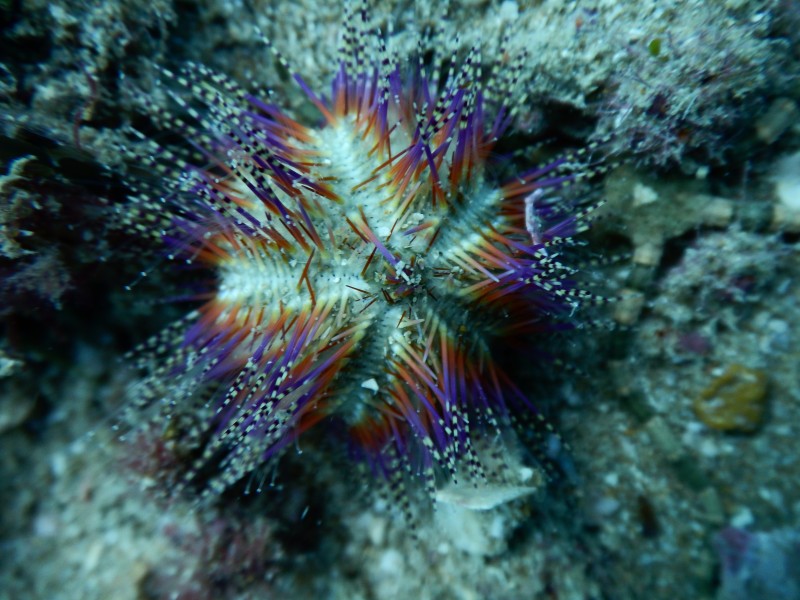
മീറ,കടൽ ചേന ( meera, kadal chena ) / Sea Urchin (സീ അർച്ചിൻ)
തിരുവനന്തപുരം വിഴിഞ്ഞത്തെ ബ്രേക്ക് വാട്ടറുകളിലും കോവളം തീരക്കടൽ പാറപ്പാരുകളിലും ഇവയെ കൂടുതലായി കാണാം.
വിവിധതരം മീറകൾ ഇവിടെ നിന്നും ലഭിക്കാറുണ്ട്. മീറയുടെ മുള്ളുകൾ പണ്ടുകാലങ്ങളിൽ സ്ലേറ്റിൽ എഴുതാനുള്ള പെൻസിലുകളായി ഉപയോഗിച്ചിരുന്നു. കടലിനടിയിൽ. ഒറ്റനോട്ടത്തിൽ ഇവ പാറകൾക്ക് മുകളിൽ വെറുതെ ഇരിക്കുന്നതായി തോന്നുമെങ്കിലും സൂക്ഷ്മ നിരീക്ഷണത്തിൽ ഇവ വളരെ പതിയെ സഞ്ചരിക്കുന്നതായി കാണാം . പാറകളിൽ പറ്റി വളരുന്ന പായലുകൾ ആണ് ഇവയുടെ പ്രധാന ഭക്ഷണം . ഒരർത്ഥത്തിൽ കടൽ പരിസ്ഥിതിയിൽ ഒരു വലിയ ധർമ്മമാണ് ഇവ ചെയ്യുന്നത്. ആഴം കുറഞ്ഞ കടലിലെ പാറപ്പാരുകളിൽ സൂര്യപ്രകാശത്തിന്റെ സാന്നിധ്യം യഥേഷ്ടം ലഭിക്കുമെന്നതിനാൽ അവിടെ വിവിധ പായലുകൾ വളരാനും ആവാസ ഇടം പതിയെ നശിക്കാനും ഇവിടെയുണ്ട് ഇത്തരം പായലുകളെ തിന്നു നശിപ്പിച്ച് ആവാസയിടത്തെ ആരോഗ്യകരമായി നിലനിർത്തുന്ന ജീവികളാണ് മീറകൾ.
പാരമ്പര്യമായി മീറകളുള്ള കടൽത്തീരത്തെ പ്രദേശവാസികൾ അവയുടെ മാംസം കഴിക്കാറുണ്ട്. മുട്ടയുടെ മഞ്ഞക്കരു കഴിക്കുന്ന ടേസ്റ്റാണ് അതിന്. 'വയറുകടി' ഉണ്ടാവുമ്പോൾ അതിനുള്ള മരുന്നായാണ് ഇവ പ്രദേശവാസികൾ കഴിച്ചിരുന്നത്. അതായത് കടലിനടിയിലെ അഴുക്ക് ഭക്ഷിച്ച് ജീവിക്കുന്ന ഒരു ജീവിയെ വയറിനുള്ളിലെ അഴുക്ക് മാറ്റാൻ മനുഷ്യൻ മരുന്നായി ഉപയോഗിച്ചിരുന്നു എന്നർത്ഥം. കേൾക്കുമ്പോൾ ഒരു തമാശയായി തോന്നാമെങ്കിലും, ഇന്ന് എല്ലാ വർഷവും ജപ്പാൻ പോലുള്ള രാജ്യങ്ങളിൽ നിന്നും ടൂറിസ്റ്റുകൾ കോവളത്തെ ഹോട്ടലുകൾ ബുക്ക് ചെയ്യുമ്പോൾ ഉടൻ ഹോട്ടൽ ഉടമകൾ അവർക്ക് നൽകാൻ കോവളത്തെ പ്രാദേശിക തൊഴിലാളികളെ വിട്ട് മീറകൾ ശേഖരിച്ചു വയ്ക്കാറുണ്ട്. മീറകൾ ഉപയോഗിച്ചുള്ള ഭക്ഷണ വിഭവങ്ങൾ ജപ്പാൻകാർക്ക് ഏറെ പ്രിയമാണ്. പ്രത്യക്ഷത്തിൽ ഇവയ്ക്ക് കണ്ണില്ല എന്നാൽ അവയുടെ ശരീരത്തിന്റെ നടുക്കായി ചെറിയ ബലൂൺ പോലുള്ള ഒരവയവം ഉണ്ട്. പ്രതികൂല സാഹചര്യത്തിൽ അവ വികസിച്ചു വരുന്നതായി കാണാം. അതായത് അവയ്ക്ക് പ്രതികൂല സാഹചര്യങ്ങളെ തിരിച്ചറിയാൻ കഴിയുന്നു എന്ന് മനസ്സിലാക്കാം. ചിലയിനം മീറകളുടെ മുള്ളുകൾ വളരെയധികം ടോക്സിക് ആണ്. അതിനാൽ രാത്രി ഡൈവിങ്ങിൽ ഇവയെ പേടിക്കണം. രാത്രിയിലെ ടോർച്ച് വെട്ടത്തിൽ മീറകളുടെ പ്രതികരണം അടങ്ങുന്ന അപൂർവ്വ ദൃശ്യങ്ങൾ FML ചിത്രീകരിച്ചിട്ടുണ്ട്.
Meera, Sea Urchin
Sea urchins are commonly found in the breakwaters of Vellayani and the rocky shores of Kovalam. Various types of sea urchins can be collected from here. The spines of the sea urchin were historically used as pencils for writing on slate. While they may appear to be simply resting on rocks at first glance, a closer observation reveals that they move very slowly. Their primary food source consists of algae that grow on the rocks. In a sense, they play a significant role in the marine ecosystem. In the shallow waters where sunlight is sufficiently available, various types of algae thrive, and sea urchins help maintain the health of these habitats by feeding on and destroying these algae.
Traditionally, local residents of coastal areas where sea urchins are found consume their flesh. It has a taste reminiscent of egg yolk. When someone has "stomach troubles," local people have used sea urchins as a remedy. This means that humans have utilized these creatures, which feed on waste in the sea, as a medicine to cleanse the stomach. While it may sound amusing, every year, when tourists from countries like Japan book hotels in Kovalam, the hotel owners often leave the collection of sea urchins to local workers to provide them promptly. Dishes made with sea urchins are quite popular among the Japanese. Although they appear to lack eyes, they have a small balloon-like organ on their body that acts as a sensory mechanism. It can be observed that they develop under adverse conditions, indicating their ability to recognize unfavorable circumstances. Some species of sea urchins have highly toxic spines, so one should be cautious when diving at night. Rare sights involving the reactions of sea urchins in the light of a night torch have been captured in FML visuals.
